
MTR Industrial Separations offers a variety of solutions for industrial processes which improve efficiency and reduce carbon footprint. Our solutions are modular, scalable and tailored to your specific separation needs. For monomer recovery in polyolefin plants, hydrogen recovery, LPG recovery, syngas upgrading, or CO2 removal from natural gas, MTR has the membrane for you.
Applications


About MTR
Since its beginnings in 1982, MTR has grown continuously as industry embraced membranes as an effective gas separation technology.
learn more about mtrWhy choose MTR
-

30+ Years
Experience -

Market Leader
in Hydrocarbon
Separation -

Global
Business -

Continuous
Product
development -

ISO
Certification
Find here the MTR Sales Agents
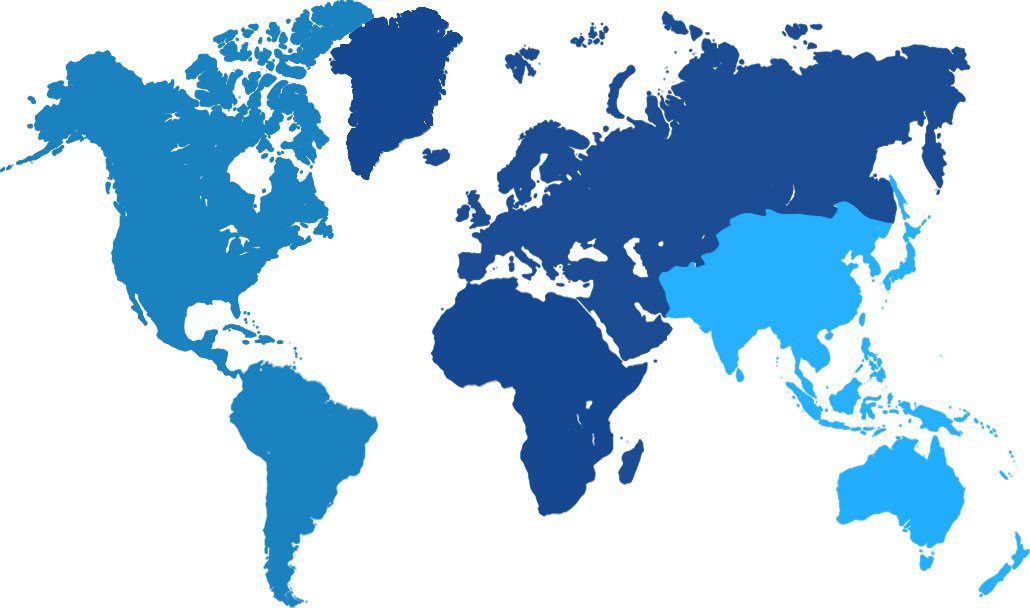

Sales Agents
Mexico :
Pro-Therm
Javier Hernandez, Monterrey
Tel: + 52 81 8397-0826
Fax: + 52 81 8397-0829
USA and Canada - All States :
Membrane Technology and Research, Inc
Contact Appropriate Product Area Lead
Tel: 1-650-328-2228
Sales Agents
Argentina :
BioPar SRL
Hugo Bibiloni, Buenos Aires
Tel/Fax +54 221 484 6982
Cell: +54 9221 573 8747
Brazil :
BRAX Consultoria e Representações Ltda. Marco Antonio Romero
Rio de Janeiro
Tel: + 55 21 3602 3943
Cel: + 55 21 9859 9689
Colombia :
Aservin
Hugo Tribin, Bogota
Tel: +57 1 621-05-44
Sales Agents
China :
Yong Wu
MTR China
Shanghai
Tel: +86 21 50897870
Fax: +86 21 50897870
India :
Mixrite Engineering Pvt. Ltd
Bharat Kumbhani, Mumbai
Tel: + 91 22 32935534
Mobile: 98331 02336
Fax: + 91 22 2836 5726
Korea :
Soha International
S. Y. Shin, Seoul
Tel: + 82 2 564 9470 2
Fax: + 82 2 564 4554
Southeast Asia (Singapore, Malaysia, Indonesia): :
Flexisolve Technology
Tan Choon Chye, Singapore
Tel: + 65 67 43 5866
Fax: + 65 67 45 3758
Taiwan :
Eurotek Development
Jack Kuo
Tel: + 886 2 2731 1148
Fax: + 886 2 2731 1146
Vietnam :
Katok Corporation
Koichi Kato
Tel: + 81-90-1259-3478
Sales Agents
For All Africa Countries Please contact Head Office :
39630 Eureka Drive
Newark, CA 94560
Tel: +16503282228
Sales Agents
Israel :
Intrater & Associates
Jacob Intrater
Tel: + 972 3 629 29 65
Fax: + 972 3 528 80 08
Turkey :
Kalkavan Group
Kagan Kalkavan, Istanbul
Tel: +90 212 259 26 47
United Arab Emirates :
Safe Technical Supply Co. LLC.
Arpit Dehade
Tel: +971 55 607 8667
+971 4 277 0722
Fax: +971 4 324 3786
Sales Agents
Sales Agents
All European Countries except Russia :
Marc Schurmans
MTR Brussels, Belgium
tel 32-2-6336751
mob 32-495-223834
Russia :
Vladimir Isaev, Moscow
Mob.: +7 916 984-50-00
Kazakhstan and Uzbekistan :
Sales Agents
For Australia Please contact Head Office:
39630 Eureka Drive
Newark, CA 94560
Tel: +16503282228
Latest News
Frequently Asked Questions
What is membrane separation and how does it work?
Membrane separation is a physical process that uses a semi-permeable membrane to selectively separate components in a gas or liquid mixture based on differences in molecular size, charge, or chemical affinity. A pressure difference across the membrane acts as the driving force, allowing certain molecules to pass through (permeate) while retaining others (retentate). This technology is widely used in industries like petrochemical, natural gas processing, and water treatment for applications ranging from gas purification to solvent recovery.
What types of membrane separation techniques are there? (e.g., UF, NF, RO)
The main types of membrane separation techniques include microfiltration (MF) for removing suspended solids and bacteria, ultrafiltration (UF) for filtering proteins and macromolecules, nanofiltration (NF) for removing dissolved organics and divalent ions, and reverse osmosis (RO) for desalination and removing virtually all dissolved particles. Additionally, gas separation membranes are used in industrial applications such as hydrogen recovery, CO₂ removal, and hydrocarbon recovery from petrochemical and natural gas process streams.
How does pressure affect membrane separation performance?
Pressure is the primary driving force in membrane separation, as it pushes molecules through the membrane’s selective barrier. Higher applied pressure generally increases the permeation rate (flux), allowing more material to pass through the membrane per unit time. However, excessively high pressure can accelerate membrane fouling and reduce membrane lifespan, so operating pressure must be carefully optimized for each application.
How to choose the right membrane for a specific separation task?
Choosing the right membrane depends on several key factors: the size and type of molecules you need to separate, the required purity level of the product, and the operating conditions such as temperature, pressure, and chemical compatibility. You should also consider the feed composition, desired recovery rate, and whether you need to handle aggressive chemicals like H₂S or CO₂. Consulting with a membrane technology specialist, such as MTR (Membrane Technology and Research), can help match the optimal membrane material and system design to your specific process requirements.
Difference between membrane separation and traditional separation methods?
Membrane separation is a purely physical process with no phase change, no chemical additives, and no heat required, making it simpler and more energy-efficient than traditional methods like distillation, absorption, or cryogenic separation. Traditional methods often involve large equipment footprints, high energy consumption, and complex operations with moving parts. Membrane systems are compact, modular, easy to install, and can operate unattended, making them ideal for remote or offshore locations.
What are the applications of membrane separation?
Membrane separation is used across a wide range of industries including petrochemical plants for hydrocarbon and monomer recovery, natural gas processing for CO₂ and H₂S removal, refineries for hydrogen purification, and water treatment for desalination and wastewater reuse. Companies like MTR (Membrane Technology and Research, Inc.) have deployed over 450 membrane gas separation systems worldwide for applications including polyethylene production vent recovery, fuel gas conditioning, nitrogen removal, and solvent dehydration.